
editionvoze

Teaching Approach

Who the course suits, what you bring to it, and how the practice sessions with authorised recordings are run from first file to final export.

Who it is for

A course for producers who finish their own audio

The course is written for UK video producers, editors and small production teams who record voices for reports, interview films, explainers and programme segments. You do not need a sound background, only a wish to hand over cleaner, better finished audio.

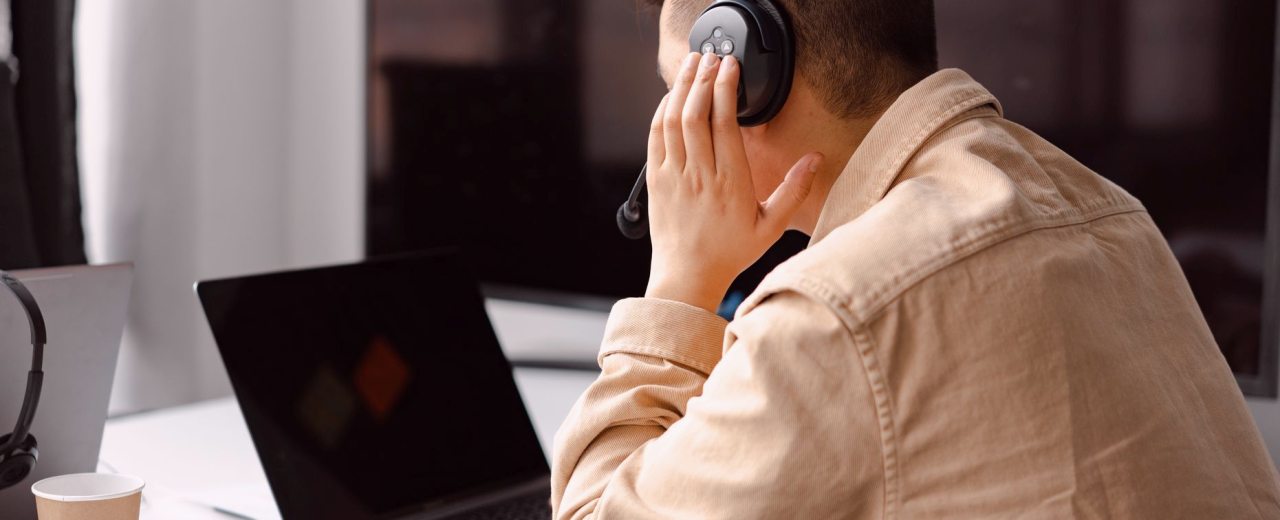
A producer checks a voiceover take against the script at a desk
editionvozeFounded 2016Based in Swansea

Most learners are producers who already cut picture and reach the point where the voice lets the film down. A hum under an interview, uneven levels between a presenter and the music, a breath left in the middle of a sentence: these are the problems the modules are built around, taken one at a time.

Some arrive from a picture editing seat and want to stop sending every voice file elsewhere. Others run a small team in which one person ends up doing everything after the shoot. Both groups tend to work well together, because the questions they bring are practical and rarely abstract.

The course also suits people who commission audio work and want to understand it. Knowing what a clean dialogue pass involves, and how long a revision realistically takes, makes briefs clearer and reviews calmer, even if you never open an editing application yourself.

It is not aimed at music production, game audio or live sound. The material stays with recorded speech: voiceover, interviews and reports, and the way that speech sits against picture. That narrow focus is deliberate, and it keeps each module concrete and useful from the first session.

Before you start

What you need to bring to the course

There are no formal prerequisites. If you can open a project in a video or audio editing application, move around a timeline and save a file, you can follow the modules. Rhys, Catrin and Daniel explain each tool as it first appears, so nobody is expected to know it already.

What matters more is the material. The course is built around authorised recordings, meaning voices you have permission to use and edit, together with an approved script for each piece. Working this way keeps practice honest: every decision is checked against what the speaker was meant to say.

A reasonable pair of closed-back headphones is worth having, since cleanup and sibilance problems are very hard to judge on laptop speakers. You do not need a treated room or expensive monitors; a quiet corner and patience will do for the early modules.

Set aside a regular block of time each week. Editing speech rewards careful, repeated listening, and short, steady sessions teach more than one long evening. Bring one or two real projects if you have them, because working on your own recordings makes the lessons stick far better.
How practice works

Learning by editing real speech, step by step

Each module is a working session on authorised recordings, not a lecture. You listen, make a change, compare it with the original and explain why you made it. The aim is a habit of careful judgement rather than a set of presets.

A learner trims a breath on a waveform while checking the script
editionvozeFounded 2016Based in Swansea

Practice follows the order of a real job. You begin with preparing source files, then move through voiceover editing, dialogue cleanup, level balancing, synchronisation with picture, review versions and final delivery. Each stage builds on the one before, so a mistake in labelling or trimming shows up later and teaches its own lesson.

Every exercise starts from a recording and an approved script. You trim breaths, repair stumbles and match takes to the text while keeping the speaker's natural rhythm. Rhys listens to your edits with you and points at the exact moment where a cut begins to sound mechanical.

Cleanup and balancing are practised on interview and report recordings with noise, hum and harsh sibilance. The rule throughout is to reduce a problem without damaging the voice, and you learn to stop early, A/B against the original and trust what you hear after a short rest.

Later sessions bring in picture. Daniel guides you through correcting drift and offset in explainers and programme segments, then through preparing a review version and keeping revisions inside an agreed scope. Catrin closes the sequence with loudness and the file formats, sample rates and naming that final delivery requires.

editionvoze

Practical voiceover editing and audio finishing training for UK video producers, run from Swansea, with paid editing and review services for those who prefer

Updates from us

Subscribe

Contact details

14 Wind Street Studios
Swansea SA1 1DZ
01792 410386
hello@editionvoze.co.uk
© 2026 editionvoze. All rights reserved.